Wednesday, August 12, 2009

Augury, "Fragmentary Evidence"


it has been a long five years waiting for these montreal technical death metallers, but they have finally released their sophomore album, fragmentary evidence. augury has created a new sound for themselves, best described as the soundtrack for a space circus: quirky, clean guitar tapping, fretless bass tapping, and playful drumming with plenty of ride cymbal. the new sound is similar to their song 'from eden estranged except a lot more crazy. a great album, but, relatively, weaker than their debut.

1.aetheral
the opener comes flying into you from the upper ether followed by a subterranean growl from patrick loisel. aetheral is classic augury, it doesn't disappoint. as always, imaginative fretless bass work by forest lapointe. the guitar solo is more of a creative lead that came from outer space.

2.simian cattle
lapointe's bass work reminds me of les claypool here. simian cattle has a scary carnival feel to it, almost like manticora's the black circus. augury is pushing their boundaries with a middle section that is unlike anything from concealed. a creative and imaginative masterpiece.

3.orphans of living
this song contains a free flowing instrumental passage that features full bass chords before going into a phenomenal solo, similar to what you'd find on concealed. by now i see that the new drummer fills in his shoes nicely.

4.jupiter to ignite
jupiter has an instrumental opening and plenty of instrumental breaks. it's spacey, and i describe it as harmonic chaos. you hear progressively more acoustic guitars as the song goes. at the five minute mark, a beautiful instrumental passage with a faster tempo shifts the momentum of the song before diving back into loisel's vocals only to rise out again into augury's now seemingly trademarked instrumentalism. this song is a roller coaster between death metal and softer instrumental breaks.

5.sovereigns unknown
loisel changes up his vocals into something a little more audible. sovereigns has a true augury solo that will implode minds as usual.

6.skyless
what can i say? these guys make it seem all too easy, no surprises here. skyless is a solid addition to what so far has been a rock solid album.

7.faith puppeteers
no instrumental passages, faith puppeteers is 100% death metal. faith puppeteers is an unrelenting 4 minutes that makes contrasts well with the next song. as i've read, this song has been played in their live shows for a while now.

8.brimstone landscapes
this one opens with acoustic guitars and pretty noises from the ride cymbal. as in sovereigns unknown, i can hear what loisel is singing at times. two-thirds in, augury surprises with the reprise of female vocals (for the only time on this album).

9.oversee the rebirth
this 11 minute epic nicely sums up what fragmentary evidence offers. augury's new sound is cemented: a mixture of progressive death metal found on 'concealed' combined with their new instrumental sections.

standing on it's own, 'fragmentary evidence' is a wonderful album. yet, looking back with respect to what they did on 'concealed', i'm a little disappointed. i miss having female vocals, i miss their acoustic songs like 'the lair of purity'. none of these elements are on 'fragmentary evidence'. still, augury has further developed their sound, and i respect their creativity and willingness to experiment.

Tuesday, August 4, 2009

Týr, "By the Light of the Northern Star"


this is tyr's fifth studio album, released surprisingly early-- only a year since their fourth album, "Land". My major complaint with "Land" is that it is too slow wherever you look. Well, with "By the light of the northern star', they've corrected their lethargy, but at what cost?

1.hold the heathen hammer high
a great opener with a highly addictive chorus. the song is a little simple, a little repetitive, but it's so catchy you can't complain. The lyrics, like many of their songs, are about pagan pride with a few jabs at christianity. Kari's drumming is less progressive than i'm used to.

2.tróndur í gøtu
another catchy chorus, this time sung in faroese, is the highlight of this song (along with the pre-chorus). it's as fast as the opener, a good sign. other than two nice solos, there's nothing else to say about this song.

3.into the storm
an epic harmonized guitar lead begins the song. the lyrics tell the story of christianization in the faroe islands in 999 a.d. heri sings well, and so far these are the best vocals/lyrics on the album. midway through the song, we hear the longest, and best, solo on the album yet. the song finishes up with another verse and chorus and ends with the guitar leads we hear in the beginning. again, simple, but nice.

4.the northern gate
heri begins the song with a vocal melody that runs throughout the song. in fact, this chant runs too much throughout the song. it's like instead of having words to their chorus they just stuck to the melody. the main riff is, well, there's not much to say about it. the solo is mostly a rehashing of the main riff with a little bit of tapping towards the end of it. errr, there's that damn vocal melody again. okay, this is really getting annoying. sing words, heri! in summation, this song is annoying. i hate to say it, but it's depressingly simple for tyr.

5.turið torkilsdóttir
so the main melody is from a faroese traditional folk song, like most of tyr's songs. the song goes like this. heri opens up with the vocal melody (this time with actual words, sung in faroese) then add guitar leads laying over that. then, add in rising snare and bass drums. then, the song is in full motion with a guitar solo that ends in the main melody. after this, it reverts backwards into the rising snare and bass dum pattern. it then goes in reverse again, to a vocal and guitar lead harmonization like in the beginning. it then ends with heri alone singing the melody, just as in the beginning. okay, while this song is super epic, why is it so simple!!! come on, tyr, you're progressive viking metal, what are you doing!

6.by the sword in my hand
ahh, okay, this song gives me hope. an off tempo riff begins the song that will be used in the pre-chorus. the chorus is one of my favorites from this album, full of awesome words like "decimate" and "decapitate" (oh, the rhyming skills of heri joensen). kari also finally has some interesting drumming.

7.ride
possibly the best song of the album. the main riff that opens the song is catchy and fast, and kari matches it wonderfully with double bass and china symbol. the lyrics are debatably stupid but oh so very fun ("they die, well at least those that didn't run to hide"). the chorus is insanely addictive. the solo is rythmic and the kari impresses again with his drumming.

8.hear the heathen call
hmmm. there's nothing terrible about this song, but nothing makes it great, either. honestly, there's nothing to say about this song, it's just...tyr. it's like most songs on this album, just with a different main riff, and different lyrics, but it follows the same formula.

9.by the light of the northern star
the longest song at almost six minutes and the flagship of the album. the lyrics are about, you can probably guess it, the past glory of vikings with again some jabs at christianity. the song follows a traditional faroese & norwegian folk song, so there isn't much room for creativity.

i think i can explain what happened with tyr. "Land" didn't do so well for nuclear blast, their record label. so, they picked out what didn't make "land" so good, and pretty much forced tyr to write fast and simple viking metal. they were crunched on time, so the lyrics are all one sidedly about vikings, instead of their usual inventiveness. i mean, even their lyrics bashing christianity are dumbed down. remember how 'eric the red' made a semi-logical argument against the christianization of the faroese? i believe nuclear blast isn't taking tyr seriously, they're just using them to make pagan metal for teenage boys full of angst who want to run around pretending to be vikings. while "land" was definitely too slow, it still had integrity in it's song structures and writing (the sixteen minute titletrack is, in my opinion, their best song). this album has not pushed the progression of tyr's unique sound that made "ragnarok" and "eric the red" so great. this album is catchy, but it's too damn simple.

Monday, August 3, 2009

A Beginner's Guide To Metal

written for the winter 2008 edition of squeezebox, dartmouth's music magazine:

The Eight Sub-genres

When I say “metal” what do you think of? Apart from such alloys as steel or brass, perhaps images of Iron Maiden, Metallica and Judas Priest come to mind. Or, perhaps, you think of devil-worshipping bands whose names are some variants of the words “satan”, “blood”, and “goat”. As a metalhead, my goal is to help you better understand the misunderstood and understated musical genre that is metal.

The most basic sub-genres of metal as they exist today are: heavy metal, thrash metal, progressive metal, power metal, folk metal, death metal, black metal and doom metal. Heavy metal first established itself in the 1970’s through the pioneering work of Led Zeppelin, Black Sabbath, Alice Cooper and Cream. Since then, heavy metal has evolved and branched off into these eight core sub-genres. Each has its own distinct sound and character, although many artists intermarry them to create new slants of these sub-genres.

Heavy Metal

The forerunner of all other forms of metal, heavy metal is a true metalhead’s staple. Heavy metal is characterized by a general sense of loudness that is made possible by fast, rhythmic drumming, heavily distorted guitars and extended guitar solos. The existence of these key components of heavy metal in all of the other sub-genres of metal is a testament to the influence of early heavy metal bands. As a rule of thumb: if a band doesn’t have these influences either directly or indirectly, then it probably isn’t metal. Iconic heavy metal bands include Iron Maiden, Black Sabbath, Judas Priest, Dio, AC/DC and Motörhead. Since this sub-genre is the oldest form of metal, there aren’t many new bands out today that play strictly heavy metal. For example, Black Label Society is the only heavy metal band I can think of that was founded as recently as 1998.

Thrash Metal

The most prominent thrash metal bands are Metallica, Megadeth, Anthrax, Pantera, Slayer and Testament. If you have heard at least one of these bands, you will know to some degree what thrash metal sounds like. If you haven’t…well, that’s why I’m here. Thrash metal is all about capturing the sound of aggression. Thrash can be described as an evolved descendant of heavy metal in the sense that it uses its main components and takes them to the extreme. Faster drumming, faster solos, and faster rhythmic picking differentiate thrash metal. Lyrical content can range from war, politics and drug abuse to heaven, hell and the occult. While I’m speaking of lyrics: don’t assume that because a song may be about, say, drug abuse, metal artists support drug abuse. For instance, look at Metallica’s “Master of Puppets”, a song about the effects of cocaine: I’m your source of self-destruction / Veins that pump with fear, sucking darkest clear /Leading on your death’s construction.

Progressive Metal

Progressive metal, I have found, is a good starting point for the metal neophyte. If you feel at all dissatisfied with the lack of virtuosity in mainstream music, give progressive metal a try. “Prog” metal is the most complex and intricate of the sub-genres of metal. Featuring odd time signatures, intricate instrumental passages, and some of the best guitar solos around, prog metal will confound and astound you. Prog metal is also the first sub-genre we’ve come across that features the piano/keyboard due to its classical influences. This added dimension gives progressive metal a lusher, fuller sound than thrash and heavy metal. Prog metal lyrics can be just as diverse as thrash lyrics, but prog metal seems to have more literary influences. I speculate that this is an indirect result of prog’s aforementioned classical influences which are unapparent in thrash. The most prominent progressive metal bands are: Dream Theater, Symphony X, Ayreon, Fates Warning, Evergrey and Queensrÿche.

Power Metal

Now on to my personal favorite, power metal. Having evolved out of speed metal (itself a sub-genre of thrash metal), power metal is best described in one word: epic. The “powerful” feeling power metal creates is achieved through harmonized guitar and keyboard leads (i.e. semitones are played over the main riff), double bass drumming, and falsetto vocals. Due to its emphasis on harmonization and choral effects, power metal songs often have sing-along choruses. Symphonic elements are also heavily used to create its epic feel. This can be done through either layering keyboard synth tracks or having an orchestra play an accompaniment. Power metal also has the highest concentration of female singers when compared to other sub-genres due to the high demand for sopranos. Lyrically, power metal covers topics such as mythology, fantasy, love and war. To get a feel for power metal vocals, here is an excerpt from Blind Guardian’s “The Hobbit”: Far to the hill we've to go / Over the mountain and seas /
To the old hill, where the old dragon sleeps / Blind in the dark dungeon's night /So God please take me away from here / And Gollum shows the way right out. As you can see, Tolkien’s Middle-Earth is a popular theme in power metal. Some of my favorite power metal bands are: Blind Guardian, Sonata Arctica, Kamelot, Nightwish, Angra and Stratovarius.

Folk Metal

What is unique about folk metal is that it varies by country. Norwegian folk metal does not sound like Israeli folk metal because of folk metal’s stress on folk instruments (such as fiddle, accordion, hurdy-gurdy, bagpipes, lute and bouzouki). Lyrically, most folk metal songs are about nature, history and mythology (mainly Nordic, hence why some folk metal is often called viking metal). So, I suppose folk metal is best for you if you always wanted to know what a viking would listen to. Apart from viking metal, you can also find folk metal bands that specialize in pirate metal (Alestorm) and, believe it or not, troll metal (Finntroll, TrollfesT). The lyrics to Finntroll’s premier album “Midnattens Widunder” is written from the perspective of trolls. Folk metal is often sung in the language of the artist’s country, meaning only about half of all folk metal is sung in English. Apart from English, folk metal is sung in such languages as Finnish, German, Swedish, Norwegian, Faroese, French, Italian, Spanish, Arabic, Hebrew, Greek, Latin and Gaulish. Some good folk metal bands are: Týr, Elvenking, Eluveitie, Lumsk, Ensiferum, Moonsorrow, Finntroll and Folkearth.

Disclaimer: The remaining sub-genres (and folk metal to an extent) make use of “growl” vocals, which often turn-off those who are exploring metal. If you are new to metal, I would recommend saving the next two sub-genres until you have already listened to at least one of the aforementioned sub-genres and feel comfortable with furthering your metal explorations.

Death Metal

Okay, so death metal is pretty similar to thrash metal except with a few changes: keyboards are more often used, the lyrics are “sung” in a growled fashion, the guitars are tuned down to make the sound heavier and the drumming is more complex. Death metal lyrics are usually, though not always, about bleak subjects (death and war). The lyrical content is what drives death metal. It is what makes the down tuned guitars and growled vocals necessary. To give you an example of what I mean, let’s look at Amon Amarth’s “Death in Fire”: Total war is here / Face it without fear / Age of sword, age of spear / Fight for honor, glory, death in fire. There simply is no other way to play a song with those lyrics. Some notable death metal bands are: Wintersun, Gojira, Amon Amarth, Children of Bodom, Opeth, Death and In Flames.

Doom Metal

I’ll be honest, I don’t listen to that much doom metal, but I’ll do my best to tell you what I know. Having developed out of Black Sabbath’s sound, doom metal creates a feeling of despair and loneliness. Note: do not associate doom metal with emo. Doom metal features down tuned guitars, slower drumming tempos and a mixture of clean and growled vocals. The music and lyrics are meant to evoke a sense of impending dread, or doom. Here is a glimpse of doom metal vocals from the band Agalloch: The snow has fallen and raised this white mountain on which you will die and fade away in silence. Although doom metal may sound depressing and boring, give it a shot when you feel like experimenting. I recommend: Katatonia, Agalloch, Amorphis, Paradise Lost, and Moonspell.

Black Metal

Black metal has a long and unpopular history. Known for inciting church burnings and Satanism, black metal is not exactly mainstream. Still, a few bad apples shouldn’t spoil the whole bunch. Not all black metal is about summoning Satan (though I recommend Belphegor if that’s what you’re into). Black metal features tremolo guitar picking, fast drumming and unfamiliar song structures. It creates a minimalist, atmospheric mood that can be quite enjoyable. Some good black metal artists include Summoning, Falkenbach, Burzum, Behemoth and Bathory.

Conclusion

Some assume that metal is ugly and brutish. I contend this view. I hold that it is engaging, innovative and beautiful. Its underground status has preserved, on the whole, its integrity in an increasingly commercial world. I have never in my life met a 'former' metalhead. They simply don’t exist. Metal is not just a fad for teenage boys to be abandoned in adulthood. When one embraces it, it embraces you back, and you become its spouse for life. I hope that you will discover its existence. I hope you will love it and embrace it as I have.

Sunday, August 2, 2009

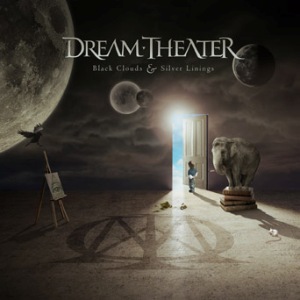
Dream Theater, "Black Clouds & Silver Linings"


black clouds & silver linings
this is dream theater's 10th studio album, released in june. before i start, i'll just say i love the album artwork and that it matches the tone of the music.

1.a nightmare to remember
lightning cracks the sky, and what sounds like the undertones of a hammered dulcimer open the album. this song features plenty of tritones to create an evil sound, much like black sabbath. mike portnoy uses impressive double bass throughout the song with great variation. after a first four minutes of aggressive verses, the song turns directions into a soothing acoustic, ethereal sounding mid-section that lasts until the 8 minute mark, at which point petrucci and rudess duel away. after the solos, it gets heavy again, with portnoy-- almost comically-- singing in an aggressive voice. the rest of the song is pretty much repetition of previous parts, though notable is portnoy's first ever use of blast beats. i'm not opposed to this, as it suites the tone of the song. the lyrics are about john petrucci's near death experience when he was caught in a car accident as a child. the lyrics aren't fantastic, but they get worse. overall, this song reminds me of halloween-- lyrics about nightmares, lightning sound effects, and tritones all create the effect. this is a far cry from what some dream theater fans may want, but i'm glad they're trying to do something new.

2.a right of passage
the weakest track of the album, and their first single. a cathcy riff takes up most of the song and doesn't leave much room for anything else. petrucci gives nice pinch harmonics, but this song is too simple for what i want from dream theater. the lyrics, about the masonic order, are boring and lack any real meaning. While boring, rest assured the solos aren't.

3.wither
the shortest song on the album at 5:26, but one of the greatest. it opens with a soothing acoustic riff, and myung's thick and calm bassline creates a wondrous sound. while i often dislike james labrie's singing, he redeems himself with this song alone. the lyrics, the highlight of the song, are about petrucci's experiences with writer's block. with these lyrics petrucci helps to recoup some of the losses he makes in regards to some of the terrible lyrics on other tracks. midway through, the apex of the song is reached with rudess' soaring string synths and labrie singing the chorus' "like reflections on the page, the world's what you create". this song immediately became one of my favorite dream theater ballads.

4.the shattered fortress
this is the final song in portnoy's twelve part suite about his recovery from alcoholism. as such, he rehashes and works in favored riffs from the previous songs in the suite. at first, i felt like i was being cheated out of a 10+ minute song, but i have since then recanted this view. though many old riffs are being reused, it's great to hear all these songs come together in a conclusive way (it's sure to be an amazing song live because of this). what is new, though, is the beginning: a thunderous prelude with drums, guitar, and keyboard coming together to make me feel like i'm ancient babylon. altogether a great song.

5.the best of times
mike portnoy played this song to his father before he passed away from cancer. that said, this song is a tribute to his father. Instead of being a song about his father's passing, it's more of a celebration of his life. the song is in e major, which lends an air of happiness to the song. in the beginning is a touching piano intro, then a lovely violin mimics, followed by a tear-producing acoustic guitar solo. after these introductions, the real song begins with an overarching riff by petrucci that reminds me of 'the spirit of radio' by Rush. towards the end of the song, portnoy's lyrics are truly hearfelt, and labrie sings them with sincerity. the highlight of the song is petrucci's ending solo, one of dream theater's best.

6.the count of tuscany
my favorite track of the album, this song has everything-- an acoustic intro, progressive verses, heavy choruses, great solo interludes, and an epic ending. the one thing that falls flat, for the most part, are the lyrics. with such cheese as "let me intoduce/ my brother/ a bearded gentleman/ historian", petrucci recounts his frightening encounter with a count of italy who takes him to his estate where petrucci's bowels then loosen in fear for his life. still, labrie sings them well and you learn to appreciate the elementary lyrics. the last five minutes are the best of the entire album. it begins with simple acoustic guitar. labrie then begins to gently sing lyrics that don't suck and a conversation between petrucci and the count follows. then comes in rudess with a simple piano line and portnoy with a bass fill before bringing in a drum pattern that carries for the rest of the song. at this point, the lyrics and vocals climax, as well as everything else. the end result is a slow progression from simplicity to symphonic grandeur. the song ends then ends with a soaring guitar solo. this five minute ending ends the album so very well and is one of my favorite passages of dream theater.

black clouds & silver linings is as good as you'd expect dream theater to be. it has its faults, but its strengths overshadow them. i believe it to be a step up from their previous album, systematic chaos, and, unlike others, i have hope for the future of dream theater. they've been making music for over twenty years, and i'm amazed i can still be impressed by them. maybe i have crappy taste in music, or maybe dream theater is just that good.

Saturday, August 1, 2009

Cain's Offering, "Gather the Faithful"


cain's offering is jani liimatainen's first solo album, but is more of a finnish supergroup with tomi kotipelto of stratovarius on vocals, mikko harkin (ex-sonata arctica) on keys, and jukka koskinen of norther/wintersun on bass.

1.my queen of winter
a great melody opens 'gather the faithful', and my hopes for this album are already realized. the lyrics are charming and i think the best on the album. fast tempo. sounds like a mix of early sonata arctica with new stratovarius.

2.more than friends
a love song, like most songs on this album, about unrequited love. the chorus has a nice vocal melody and kotipelto puts in a nice amount of variation to keep the choruses memorable. slower pace, and heavier than the opener. there is an instrumental interlude with really great bass work.

3.oceans of regret
one of the best tracks, and one of the longest. here we first hear jani's guitar hegemony with a nice solo towards the end of the track. by now you'll notice that mikko seems to get more attention than jani-- i was hoping for each track to be full of jani's solos. the vocals have good melody, but i don't really like the lyrics themselves (kotipelto is complaining about some lady who "hurts me just because you can")

4.gather the faithful
the album's eponym is an instrumental track full of orchestral bombast. short, but lively and progressive.

5.into the blue
a slower ballad, with a repetitive chorus, but kotipelto pours enough emotion into his singing for you to not mind the repetition.

6.dawn of solace
a chipper song, but pretty standard when it comes to power metal. the lyrics are similar to oceans of regret, so yeah. good solos, i was more impressed by mikko's.

7.thorn in my side,
in my opinion, the weakest track of the album. nothing makes this one stick out, and i find myself skipping over this one frequently. oh, and there are these annoying digital drums that make this song seem way too electronic for its own good.

8.morpheus in a masquerade
a rival with oceans of regret and my queen of winter for best song on the album, and it's also the longest at 6:45. plenty of variation and tempo changes. more solos by jani make this track all the more worthwile. a waltzy atmosphere matching the lyrics makes this song quite playful.

9.stolen waters
an average song compared to what we've heard so far, but jani's solo saves it from mediocrity. i also like the name, so that makes it better than thorn in my side.

10.elegantly broken
a beautiful ballad led by mikko on piano with kotipelto sining wonderfully. the way he sings the song's title lyric at the end ("together we will be, so elegantly broken") makes the entire song. its the shortest song at 2:45, but every second is valuable.

on the whole, a great, happy power metal album, my only complaint is the songs all had too similar a feeling and not enough variation on the whole in terms of tempo, heaviness, and lyrical content. also, i wanted jani's guitarwork to stand out a whole lot more. i mean, considering he left sonata arctica and now has a chance to do his own music, i would have expected him to have more inspiring guitar work in the songs. after a couple of listens, the songs become addictive.